

Market entry brief
Saudi Arabia can be relevant for Chinese brands in consumer technology, home energy, smart living, beauty and lifestyle categories. A credible market plan should begin with channel fit, local service capability, Arabic communication and product-specific compliance review.
Retail, pharmacy, electronics, grocery and online channels need different launch programmes. Distributors should show how they will manage import, registration, stock, localized promotion, customer education, warranty and repeat orders rather than treating a first shipment as the finish line.
Market whitespace test
Test five conditions before calling this an agency opportunity
Brand awareness or scattered grey-market sales can signal interest, but neither proves that an authorized or exclusive distribution right is available.
- Demand evidenceSeparate search, social and trade signals from repeatable local willingness to buy.
- Current channel mapCheck official distributors, direct sales, resellers, marketplaces and existing contractual conflicts.
- Commercial economicsModel landed cost, channel margin, inventory, marketing, warranty and working-capital requirements.
- Compliance and serviceConfirm product registration, certification, language, spare parts, returns and after-sales obligations.
- Brand route and rightsVerify the decision-maker path and whether product, country, channel and performance-based rights can be discussed.
Market overview
Start with the customer segment, retail price architecture, channel margin, service expectations and launch geography. Do not treat the country as one undifferentiated sales channel.
Country demand signals
Saudi official statistics provide the baseline for trade and consumer-market sizing. Priority categories on ChinaBrandPath include consumer technology, energy, smart living and personal care, but Arabic content, importer responsibility, conformity and local service must be planned by exact product.
China goods and import relationship
Saudi Arabia reported $69.7B in merchandise imports from China in 2025. The latest World Bank total-merchandise-import value used on this page is $254.1B (2025); the bilateral flow is equivalent to about 27.4% of that separately reported total. This points to deep existing exposure to Chinese supply. A new Chinese brand still needs product differentiation, controlled channels, local service and a reason for buyers to switch from established branded, private-label or unbranded alternatives. This is a directional exposure indicator, not an exact import share: the two series can differ by reporter, valuation, timing and later revisions, and merchandise trade does not prove awareness or demand for a particular Chinese brand.
Suitable product categories
Consumer technology, portable energy, smart home, beauty and personal care, home entertainment and selected lifestyle products.
Local channel characteristics
Modern retail, specialist chains, ecommerce marketplaces, project sales and distributor-led wholesale can play different roles. Channel conflicts should be mapped before appointment. Internet use of 100.0% supports testing ecommerce and digitally assisted retail alongside physical channels. With 84.6% of the population urban, an importer can test defined city clusters before expanding nationally.
Target importer and distributor types
Importers with compliance capability, national or regional distributors, specialist retailers, ecommerce operators and project-channel partners.
Import and landed-cost considerations
Confirm importer-of-record responsibility, landed cost, Arabic labelling, warranty handling, spare parts and returns before agreeing commercial terms.
How to evaluate a Chinese brand for this market
For Saudi Arabia, separate Chinese-origin product availability from brand opportunity. Before representing or importing a Chinese brand, verify the legal company and trademark, territory and channel status, exact SKU documents, localized packaging and claims, warranty and spare-parts ownership, landed margin and written commercial authority. A catalogue listing or global partner form does not prove that this country is open or that the brand authorizes a local seller.
Certification and regulatory screening
Requirements vary by product. Obtain current product-specific advice and validate documentation with the relevant Saudi authorities before shipment.
Importer action plan
- Verify the exact HS code, importer-of-record role, destination rule and product documents for the chosen SKU.
- Define one or two city clusters, one buyer segment and one channel for the first 60–90 days before discussing national rights.
- Run a measured ecommerce or digitally assisted retail test alongside a partner that can fulfil, support and remarket locally.
- Compare fully landed cost, channel margin, warranty and returns against named local alternatives; advance only when the pilot has a stop rule and a reorder threshold.
Use the importer decision map to document the next evidence gate
Chinese brands linked to this market
No published brand profile currently carries a verified country-specific relationship for this market. This does not mean Chinese products are absent or that a territory is available; use the directory for discovery, then confirm the exact brand, product and country directly.
Importer workspace
Test the commercial assumptions
Use this page as context. Your working numbers stay in this browser unless you choose to submit a business brief.
Reviewed partner routes in this market
No reviewed public partner route is linked to this market yet. This does not prove that a territory is open or closed; confirm the exact brand and requested rights.
Guides and market resources
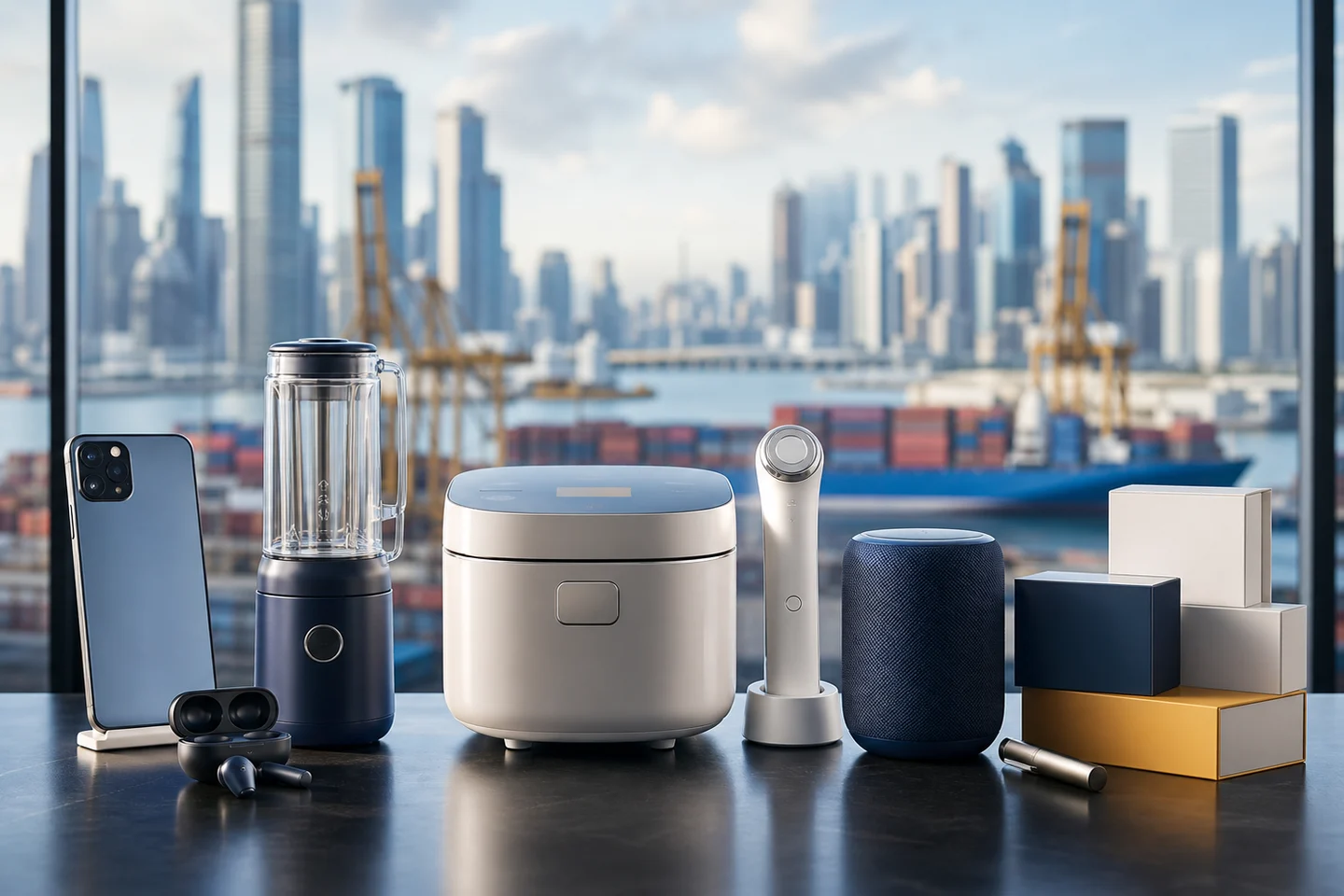
Why Are Chinese Brands Scaling Up in Saudi Arabia, and What Does It Mean for Middle East Agents?
Gulf buyers absorbed 1.39 million China-made vehicles in 2025, and Saudi Arabia is projected to be the GCC's fastest-growing EV market through 2031. The demand is policy-built under Vision 2030, and it is widening from cars into smart home and consumer categories. Here is what the shift means for Middle East agents evaluating Chinese brand partnerships.

What Do Chinese Brands Look For in a Local Market Distributor?
The view from the other side of the table: what Chinese brands actually weigh when they choose a local distributor or agent, so you can position your application to win the partnership instead of competing on price.
Sources, method and review
- General Authority for Statistics, Saudi Arabia
- UN Comtrade — Saudi Arabia merchandise imports from China, 2025
- SABER conformity platform
Editorial owner: ChinaBrandPath editorial team
Sources checked:
Last reviewed:
World Bank and UN Comtrade values are used for directional market screening. They may use different reporters, valuations, years and revision schedules. They do not prove product-level demand, compliance, brand authorization or territory availability.
Regulatory notes are an initial research guide, not legal advice. Confirm the exact product, HS code and shipment with qualified local specialists and the relevant destination authorities.
