
Saudi Arabia is becoming the Gulf's most important scale-up market for Chinese brands. Gulf buyers absorbed 1.39 million China-made vehicles in 2025, Middle East imports of Chinese electric vehicles nearly doubled, and Saudi Arabia is projected to be the GCC's fastest-growing EV market through 2031. For Middle East agents, the opportunity is shifting from one-off trading toward long-term brand representation.
The numbers behind the shift
An April 2026 report from Middle East Briefing sets out how quickly the Gulf has become a priority destination for Chinese vehicles and the brands behind them.
- Gulf states such as Saudi Arabia and the UAE absorbed 1.39 million China-made vehicles in 2025, about one-sixth of China's total overseas car shipments. That makes the region China's second-largest external car market.
- The Middle East imported US$7.4 billion of Chinese electric vehicles in 2025, up 92 percent year on year.
- The GCC electric vehicle market is estimated at US$11.64 billion in 2026, up from US$9.53 billion in 2025, with projected annual growth of just over 22 percent through 2031.
- Within that market, Saudi Arabia is projected to be the fastest-growing EV market in the GCC through 2031.
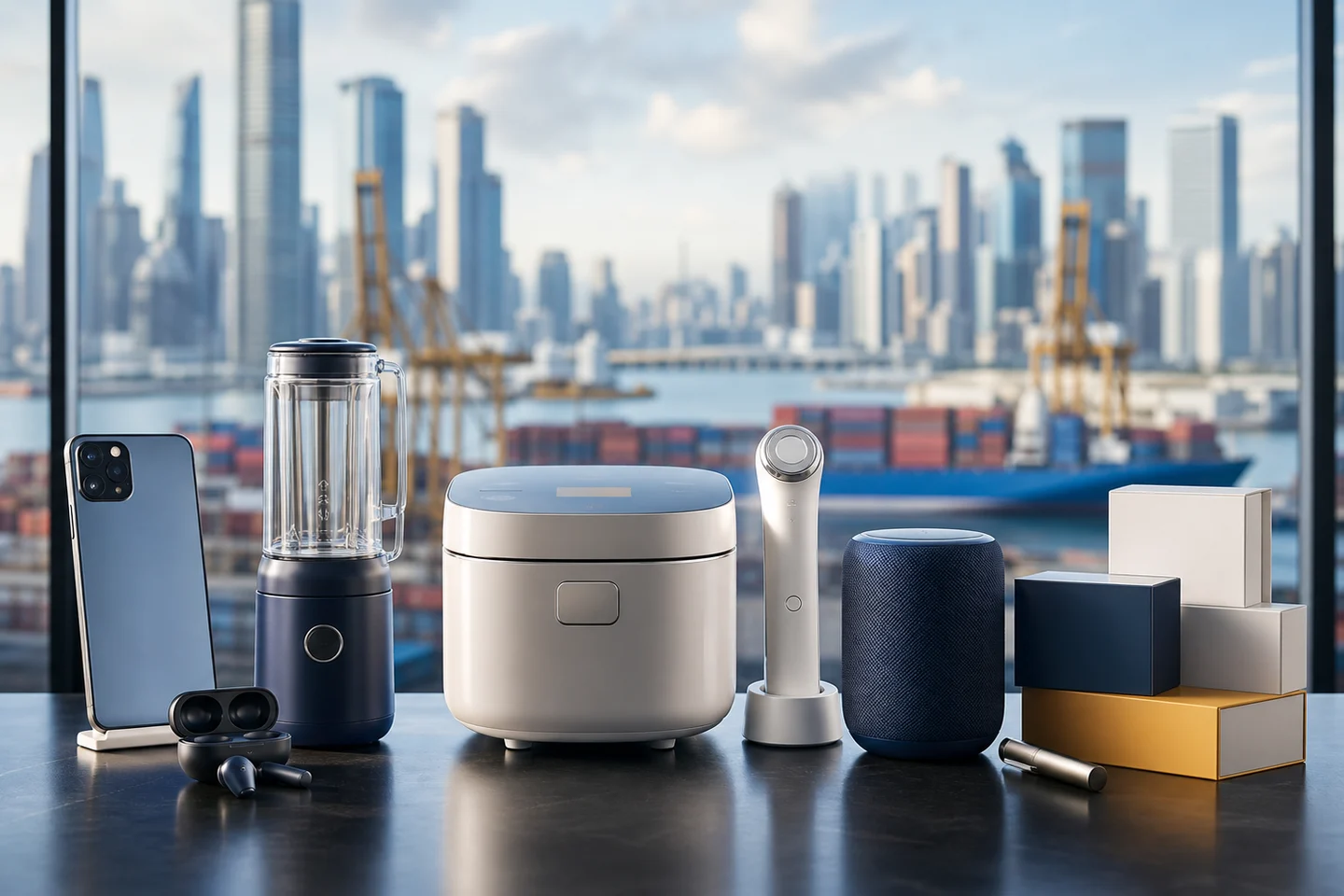
Vehicles are the visible edge of a wider trade relationship. China exported about US$50 billion in goods to Saudi Arabia in 2024, spanning cars, electronics, home appliances, and consumer products.
Saudi demand is policy-built, not price-shocked
In the UAE and Qatar, rising fuel prices are pushing consumers toward electric vehicles. Saudi Arabia is different: retail fuel prices remain stable under administered pricing, so the EV story there is not a reaction to pump shocks.
Instead, demand is being constructed by industrial policy. The EV push is embedded in Vision 2030 and backed by the Public Investment Fund, which owns the national charging company EVIQ. EVIQ operates 121 chargers across 48 locations in seven cities and plans more than 5,000 fast chargers at 1,000 locations by 2030. EVIQ paired with BYD in January 2025 to expand charging solutions, and Saudi Aramco signed a joint development agreement with BYD on new-energy vehicle technologies in April 2025.
Sales are still early. Public estimates of Saudi EV sales in 2024 ranged from roughly 2,000 units to more than 11,000, depending on counting methodology. But that is exactly the point for agents: the infrastructure, the policy, and the brand entries are arriving before the volume, which is when distribution and service territories are typically negotiated.
Cars open the door, consumer categories follow
Automotive visibility tends to raise acceptance of Chinese brands across other categories, and the region's buyers are responding. According to Xinhua, around 300 Chinese companies, including Haier, Hisense, and Midea, exhibited at the Middle East Consumer Electronics Show in Dubai in late 2025, drawing buyers from Saudi Arabia, the UAE, and Qatar. Smart home products, energy-efficient appliances, and AI-enabled devices were the focus.
For Saudi Arabia specifically, a young population, large households, and Vision 2030 consumer-economy projects make mobility, smart home, and lifestyle categories natural follow-ons to the automotive wave.
What this means for Middle East agents and distributors
- After-sales capability is becoming the deciding factor. In a policy-built market, brands are judged on service networks, spare parts, and warranty delivery, not only on price. Agents who can build or coordinate service depth hold stronger negotiating positions than pure traders.
- Localization is the direction of travel. The report notes that the next phase of China-Gulf cooperation is about turning import flows into local value creation. Brands will favor partners who can support training, service localization, and deeper market work over time.
- Territory logic matters. The UAE held an estimated 42 percent of GCC EV market value in 2025 and acts as the region's re-export hub, while Saudi Arabia is the scale-up market. Agents should be precise about whether they are negotiating a Saudi-only role or a wider GCC arrangement.
Questions to ask before taking on a Chinese brand for Saudi Arabia
- Who is responsible for product conformity registration under SASO's Saber platform, and which certificates already exist for the models you would carry?
- What after-sales, warranty, and spare-parts support will the brand commit to inside the Kingdom?
- For EV and mobility products, how does the brand plan to connect with the national charging ecosystem?
- Is the brand offering a Saudi-only agency or a GCC-wide arrangement, and how are territories and channel conflicts handled?
- What Arabic-language marketing, training, and technical materials are available for your team and your retail partners?
- How does the brand's five-year roadmap align with localization expectations under Vision 2030?
A structured way to evaluate the opportunity
The Saudi market rewards preparation. The brands entering now are selecting partners for a long build-out, and the agents who benefit most will be those who evaluate brand readiness as rigorously as brands evaluate them.
ChinaBrandPath helps global importers, distributors, retail buyers, and regional agents discover and evaluate export-ready Chinese brands for local-market distribution, agency, and long-term cooperation.
If you distribute in Saudi Arabia or the wider Middle East and want to assess Chinese brand opportunities in mobility, smart home, or consumer categories, you can submit your distributor profile through ChinaBrandPath to receive brand options matched to your channels and market.
